PyOpenGL 4.0.0a1
Written by
on
in
Snaking.
I've been trying to make some time for Open Source projects again. I've been using LLMs for much of the coding because the vast bulk of it at this point is just grunt work. First up is PyOpenGL. The tests the LLM produced turned up a bunch of bugs in the core that have lain dormant for years because the endpoints weren't getting used. The LLM tests are not particularly fun or interesting, but they did a pretty good job of finding wrapping errors. They also exercised GLES and EGL enough to make it far more reasonable to actually use those two interfaces.
Shout out to glfw python library for working cleanly on the Wayland only environment. Definitely helped to find the hidden GLX dependencies we had throughout the Linux platform implementation. One of the biggest ones there was the GLUT library. The other thing that came out was the GLE library being legacy (compatibility) OpenGL.
PyOpenGL 4.0.0a1 is classified as a major release mostly because of the abandonment of old Pythons (<3.9) and old Numpy (<2). Other than that there's mostly just bug-fixes that came from the new test suites.
GLU
* gluUnProject4 missing arguments
* gluNewQuadric/gluQuadricCallback fix the callback mechanism to work like Nurbs code
* gluTessVertex/gluTessBeginPolygon and combine callback, original object return fixes
* gluGetNurbsProperty added, allocates the output
* gluNurbsCallbackData(EXT) argtype fix
glGet Sizes
* sizing tables regenerated based on results from size probing, lots of incorrect sizes fixed; note that these fixes are constrained to extensions I happen to have access to on my platforms
* fix the code generator's constant generation
* glGetPolygonStipple fixed size output
* glGetCompressedTexImage glGetTexImageCompressed was ignoring level and using an ARB constant
Wrappers
* remove double wrapping on glGetHistogramParameter{f,i}vEXT, glGenVertexArrays, glDrawBuffersEXT (which was also mis-named glDrawBuffers)
* glHistogram double wrapped as well, which was crashing vertex_array_object on import which was then causing higher level code to treat the extension as unsupported
64-bit Integer Arrays
* GL_INT64 / GL_UNSIGNED_INT64 new array types for all of the array handlers
No-Numpy Operation
* ctypesarrays zeros/ones handler
* a few spots where GLchar arrays were needed as return types
* gl(Get)ProgramNamedParameter*NV input size fix
* glGetActiveAttribARB optional bufSize parameter added
* ARB.vertex_shader allow passign in size parameter
* allow passing a ctypes char_p as shader-text
GLES
* images module for GLES
* friendly wrappers mimicing the GL ones for lots of endpoints
* glGetString/glGetStringi restype fix
* Normalising of GLES extension names to the GL_* form (same as GL)
General Bug Fixes
* Large constant wrapping fix
* Caching of extension/version data per-context
* Core/version extension handles cases where "VERSION" is not the *first* token
* ShaderProgram.retrieve() fix for unpacking glGetProgramBinary
* input-or-output converter for args that can be either
* ArrayDatatype.get_ffi_argtype etc PyPy specific mechanisms for array interactions
Logging
* make the log decorator more type-check friendly
Packaging
* License declaration fixes for more modern packaging tools
There shouldn't be many significant regressions, as almost everything is a correctness fix, but there's a lot of new code, particularly for the GLES improvements. The alpha is up now for those who want to test the changes against their codebase, but this is an alpha release, so there may be more significant code changes as we move toward a 4.0.0 final release.
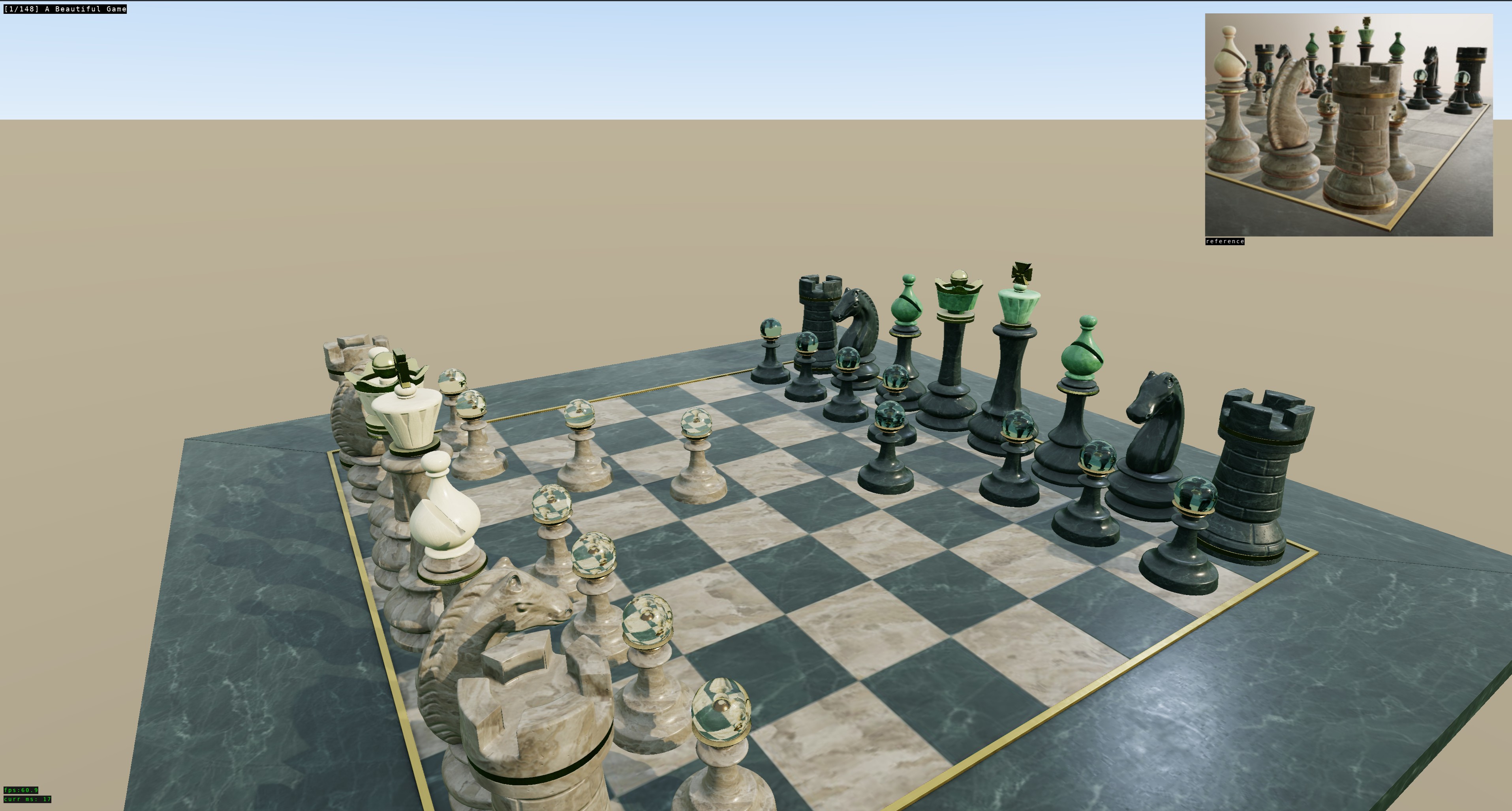
There's still some work to do on the OpenGLContext release, but the teaser image above should give you an idea where it's going. It's a direct render of the Khronos sample asset A Beautiful Game
Pingbacks
Pingbacks are open.
Trackbacks

Mike C. Fletcher, the VRPlumber, is a philosopher of design turned computer programmer based in Toronto, Canada. He works primarily in the Python programming language, and maintains a large number of Open Source software packages. You can reach him at: mcfletch@vrplumber.com.
Comments
No comments yet.